
Member Spotlight – Keito Ortiz
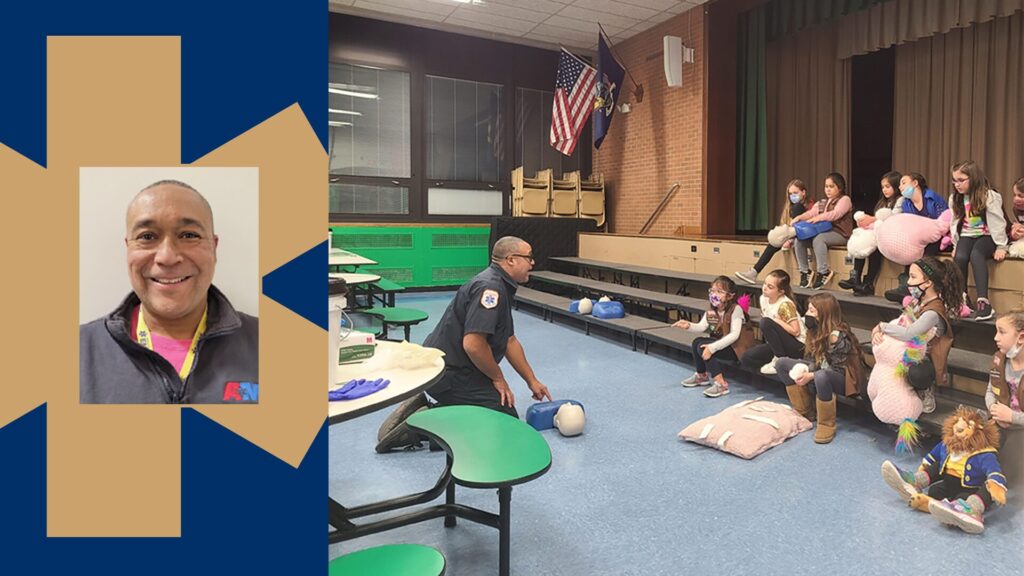
Keito Ortiz, Paramedic, EMS Educator
For over 30 years, Keito Ortiz worked as paramedic and EMS educator in and around New York City. He’s seen his share of horrors. But nothing prepared him for the day in September 2023 that he got a call from his wife: their daughter’s bus had veered off an interstate and toppled into a ravine in upstate New York. The bus was filled with students headed for band camp in Pennsylvania.
“It was the beginning of my nightmarish feeling,” Ortiz recalls. “As a paramedic, we understand trauma outcomes and probabilities.”
His daughter was found with deep bruises, cuts and ligament injuries. EMTs marked her with a yellow tag. Others fared worse. Several students were critically injured, and two teachers died. After months of rehab, his daughter’s physical injuries are healing. But her mental anguish remains, Ortiz says. The trauma has impacted the entire family. Seeing his daughter in pain, feeling powerless to fix it, and reliving the awful moment that he feared he lost her, have left Ortiz feeling depressed and anxious too. “It hits differently when it’s your child,” Ortiz says. The family has sought counseling to help them through it.
There may have been a time when Ortiz wouldn’t have been so open about his mental health struggles. Today, he feels it doesn’t get talked about enough.
What do you like about teaching?
Being a paramedic, you are a singular person doing one good deed as a time. Being an educator, you are a multiplier. If I can make a difference for my students, they will go out and do 10,000 jobs, and they will do better work. You can make a difference on a grander scale. I put my heart and soul into teaching the next generation because they can affect thousands of other people.
Do you feel today’s younger generation of students learns differently?
When I was a student, there was less interaction between teachers and students. It felt like a sink-or-swim situation. Today’s students crave feedback and validation.
They are more comfortable with adults and authority figures. Students also have constant access to media. Classroom time seems unnecessary to some. They can just Google the answers. So the educator needs to create a warm, welcoming and friendly environment.
I avoid “death by PowerPoint.” I don’t use it unless I absolutely have to. Their“Nobody wants to talk because they are afraid of being judged. I’m not. I say, ‘Let’s talk about it,’” Ortiz says. “I was at the breaking point mentally. Yet I found it to be so challenging to find help. I had to fight to find resources. It should not be that hard to find help.”
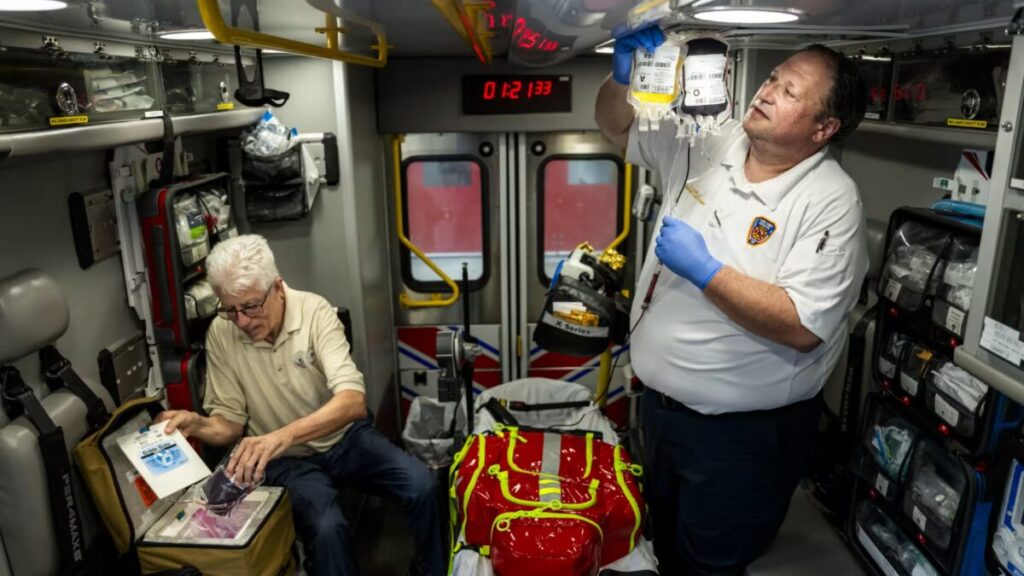
Ortiz has worked as a paramedic in the South Bronx, and as prehospital care training coordinator at Jamaica Hospital Medical Center in Queens, New York. Today, he’s continuing education specialist for AMR in Bay Shore, New York, where he provides continuing education for over 300 EMTs and paramedics. He’s also studying to become a critical care paramedic, and working on his bachelor’s degree from Columbia Southern University. On weekends, he works paramedic shifts for two local fire services. “That’s my fun,” he says. “I enjoy the patient care and the interaction with people.”
Ortiz spoke with NAEMT News about the importance of EMS practitioners seeking help for mental health issues, why he loves teaching, and how he tries to inspire the next generation of EMS practitioners. phone is also a key component of the class now. I expect them to have their phone in their hand anyway, so I’ll have a QR code that they can scan. The code goes to a video or something I want them to read. We reinforce most things with simulations, using high-fidelity manikins.
I also engage them. I have ADD and dyslexia. I tell them, “If I can do it. You can do it.” I take medication if I have to take a high stakes exam. Knowing these things about me helps them open up. They recognize I care about them.
Why did you decide to pursue a bachelor’s degree?
I’m working on my degree from Columbia Southern University in industrial hygiene – thank you NAEMT for the discount. I’m interested in a position in risk management. Will I ever give up being a paramedic? Probably not.
Why did you want to get more involved with NAEMT?
I was a member for many years. I approached NAEMT staff at EMS World Expo and said, “What more can I do? How can I become more involved?” There are a lot of things that need to be done in my state. I wanted to influence people to make positive moves for the EMS community. I have a lot of ideas, and by being involved with NAEMT I could help make those happen.
In New York, I am constantly telling people why they should join, and how NAEMT benefits us as individuals and the EMS community. If they give me 5 minutes of their time, they usually join, and it gets them more involved with the EMS community as a whole.
More Articles